What Is Proof of Reserves? 7 Ways to Check Whether an Exchange Really Holds Your Crypto
What Is Proof of Reserves? 7 Ways to Check Whether an Exchange Really Holds Your Crypto
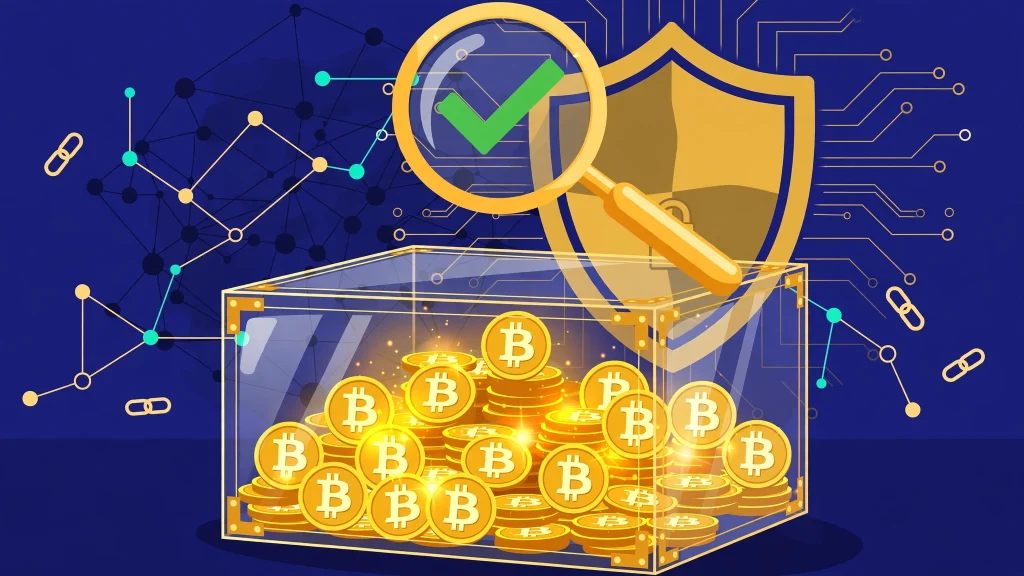
Proof of reserves is a simple idea with a big job: it lets a crypto exchange show — with evidence, not just words — that it actually holds the crypto its customers deposited. After several big exchanges collapsed while quietly owing customers far more than they held, beginners started asking a fair question: how do I know my coins are really there? This guide explains proof of reserves in plain English — what it can and cannot prove, and seven ways to check an exchange before trusting it with your money.
1. What Proof of Reserves Actually Means
When you deposit crypto on an exchange, it holds the coins for you in its own wallets. Your account balance is just a record in the exchange’s database — it does not, by itself, prove the coins exist. Proof of reserves is the exchange’s public attempt to prove its on-chain holdings are at least as large as the balances it owes customers. In short: if every customer asked for their crypto back at once, would the exchange have enough to pay them all?
Most exchanges publish a proof of reserves report every month or so. It usually includes a snapshot of the exchange’s wallet addresses and balances, plus a way for users to verify their own balance was included in the total.
2. Why Proof of Reserves Became a Big Deal
Proof of reserves moved from a niche accounting idea to a mainstream demand after FTX collapsed in late 2022, when one of the world’s largest exchanges turned out to have used customer funds in ways customers never agreed to. Large hacks have taught the same lesson before — when an exchange lost 7,000 Bitcoin in a major security breach, users learned that trusting an exchange means trusting its security and its honesty, as explained in our breakdown of the Binance hack and how to protect yourself.
3. How a Proof of Reserves Check Works
A typical proof of reserves process has three parts:
- The exchange lists its wallet addresses. It publishes the public addresses it controls, so anyone can look up the balances on a blockchain explorer.
- An auditor checks the liabilities. An independent firm takes a snapshot of all customer balances and confirms the total owed.
- A Merkle tree lets you verify yourself. The exchange builds a cryptographic structure that includes every customer’s balance. You can enter your account ID and confirm your balance was counted, without the exchange revealing other users’ private details.
When the assets in the published wallets are at least as large as the total customer balances, the exchange can claim its reserves cover its liabilities.
4. What Proof of Reserves Can Prove — and What It Cannot
Proof of reserves is useful, but it is not a guarantee:
- It can prove: the exchange controls wallets holding at least as much crypto as customers are owed, at the moment of the snapshot.
- It cannot prove: whether the exchange also has hidden debts, loans, or liabilities that are not on its balance sheet.
- It cannot prove: that the funds stay there after the snapshot is taken.
- It cannot prove: that the exchange’s business is healthy, well managed, or safe from a hack.
A clean reserve report is a good sign, but it is a snapshot, not a seal of approval. Think of it like a photo of a full warehouse — it shows the goods were there on that day, but it says nothing about what happens tomorrow.
5. 7 Ways Beginners Can Check an Exchange’s Reserves
Here are seven practical steps:
- 1. Look for a published proof of reserves page. Reputable exchanges link it from their website or help center. If an exchange publishes nothing, that is a warning sign.
- 2. Check how recent the report is. A report from six months ago tells you little. Monthly reports are the norm among larger exchanges.
- 3. Verify your own balance in the Merkle tree. Most proof of reserves pages include a tool where you can check that your balance was included.
- 4. Look at the wallet addresses yourself. Paste a published address into a blockchain explorer and confirm the balance roughly matches the exchange’s claim.
- 5. Check who did the audit. A report from a known independent audit firm carries more weight than a self-published claim with no outside check.
- 6. Ask whether liabilities are included. A report that only shows assets, without confirming total customer balances, is only half the picture.
- 7. Watch for red flags. Vague language, missing dates, no auditor named, or a report that quietly disappears are all reasons to be cautious.
6. Proof of Reserves vs. Proof of Liabilities
Beginners often hear two similar terms and mix them up. Proof of reserves shows the assets — what the exchange holds. Proof of liabilities shows what the exchange owes its customers. A complete picture needs both: an exchange could show impressive wallet balances and still be in trouble if it owes even more than it holds. That is why the strongest reports cover both sides and are checked by an independent auditor.
7. Safer Habits While Using Any Exchange
Even the best proof of reserves report is no substitute for good habits:
- Keep only what you trade on an exchange. Larger amounts are safer in a wallet you control, as explained in our guide on hot wallets vs cold wallets.
- Enable two-factor authentication. It protects your account even if your password leaks.
- Withdraw a small test amount first. Before moving a large sum, confirm withdrawals work smoothly with a small one.
The Bottom Line
Proof of reserves is the crypto industry’s answer to a simple trust problem: an exchange should be able to show it holds the crypto its customers deposited. A regular, independently checked report that covers both assets and liabilities is a strong positive sign — but it is only a snapshot, and it cannot prove an exchange has no hidden debts. Use it as one check among several, keep most of your crypto in a wallet you control, and never deposit more on any exchange than you can afford to lose.
If this helped you understand how exchanges prove they hold your crypto, share it with a friend who is new to crypto — it might save them from trusting the wrong platform.
Disclaimer: This article is for educational purposes only and is not financial advice. Cryptocurrency prices are volatile. Always do your own research before buying any crypto asset.