What Is Crypto Staking? 7 Things Every Beginner Should Know Before Locking Up Coins
What Is Crypto Staking?
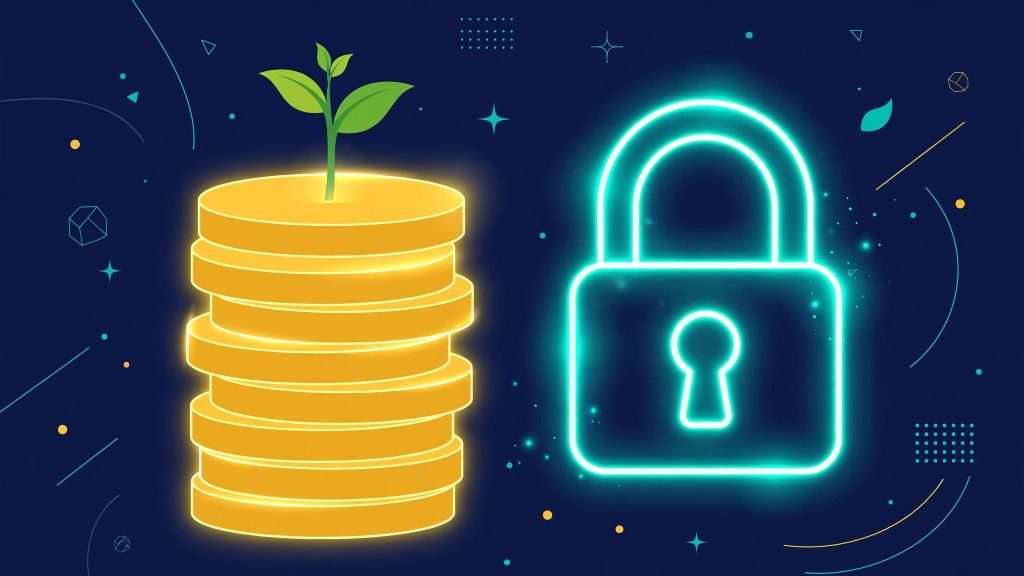
Crypto staking means locking up your coins to help run a blockchain, and earning rewards for doing it. It only works on blockchains that use proof of stake — a system where the network is secured by people who put their coins at stake, instead of by miners burning electricity. When you stake, your coins are held in the network for a period of time. In return, the network pays you new coins, usually from new issuance and transaction fees. Think of it like a security deposit: you put money down to show you will behave, and the network pays you for the service. You do not give your coins away, but you also cannot spend them while they are staked.
How Does Staking Work?
On a proof-of-stake network, validators do the work of checking transactions and adding new blocks. To become a validator, you lock up a minimum amount of coins as a stake. Most beginners never run a validator themselves — the minimum is often large, and running one needs technical skill. Instead, they delegate: they lock their coins with a validator or through a staking pool or an exchange, and share in the rewards. The validator takes a small cut, and the rest goes to the people who staked. If a validator misbehaves — for example, by signing two conflicting blocks — the network can take some of its staked coins away. That penalty is called slashing, and it is what keeps validators honest.
Proof of Stake in Plain Words
Proof of work, used by Bitcoin, asks miners to solve puzzles with computing power. Proof of stake asks participants to lock up coins instead. Both systems answer the same question: who gets to add the next block, and how do we stop cheaters? In proof of stake, the answer is that cheaters lose their own money, so cheating costs more than it earns. Ethereum, the second-largest cryptocurrency, switched to proof of stake in 2022, which made staking a mainstream topic overnight. Many newer blockchains were built on proof of stake from the start, and staking has become one of the first things beginners ask about after buying their first coins.
7 Things Every Beginner Should Know Before Staking
- Your coins are locked for a while. Unstaking is not always instant — some networks take days or weeks to return your coins, and you cannot sell during that wait.
- Rewards vary and are not guaranteed. The reward rate changes with how many people stake, and it is paid in the same coin, so its value can fall.
- Slashing is real. If your validator misbehaves, you can lose part of your stake. Choose validators with a good track record.
- Platform risk matters. Staking through an exchange is easy, but you trust that exchange with your coins. If it fails or freezes withdrawals, your stake is stuck with it.
- Not every coin can be staked. Bitcoin cannot be staked — it uses proof of work. Only proof-of-stake coins offer staking.
- Taxes still apply. In the United States, staking rewards are generally taxable income when you receive them, and selling them later can be a second taxable event. Rules change, so check current guidance.
- Start small. Stake a small amount first, learn how unstaking works, and only then decide whether to stake more.
3 Mistakes Beginners Make With Staking
The first mistake is chasing the highest advertised rate. A very high rate usually means a risky coin, a new network, or a lock-up that is hard to exit. The second mistake is staking everything at once. If the price falls while your coins are locked, you cannot sell until the unstaking period ends. The third mistake is ignoring who holds the coins. Staking through an unknown platform to save a small fee is a bad trade — the platform is the risk.
The Bottom Line
Staking lets you earn rewards by locking up coins to secure a proof-of-stake blockchain. It is simple to start, especially through a pool or exchange, but your coins are locked, the rewards are not guaranteed, and the validator or platform you choose carries real risk. Learn the lock-up time, the slashing rules, and the tax side first — then decide whether staking fits what you want from crypto.
Share this with a friend who is new to crypto.
Disclaimer: This article is for educational purposes only and is not financial advice. Staking involves risk, including loss of staked coins. Always do your own research before staking any crypto asset.
1 Comment on "What Is Crypto Staking? 7 Things Every Beginner Should Know Before Locking Up Coins"
[…] rate changes, validators charge different fees, and the value of SOL itself moves up and down. Our guide on what crypto staking is explains the idea in detail, including the risks that apply on every network, not just […]