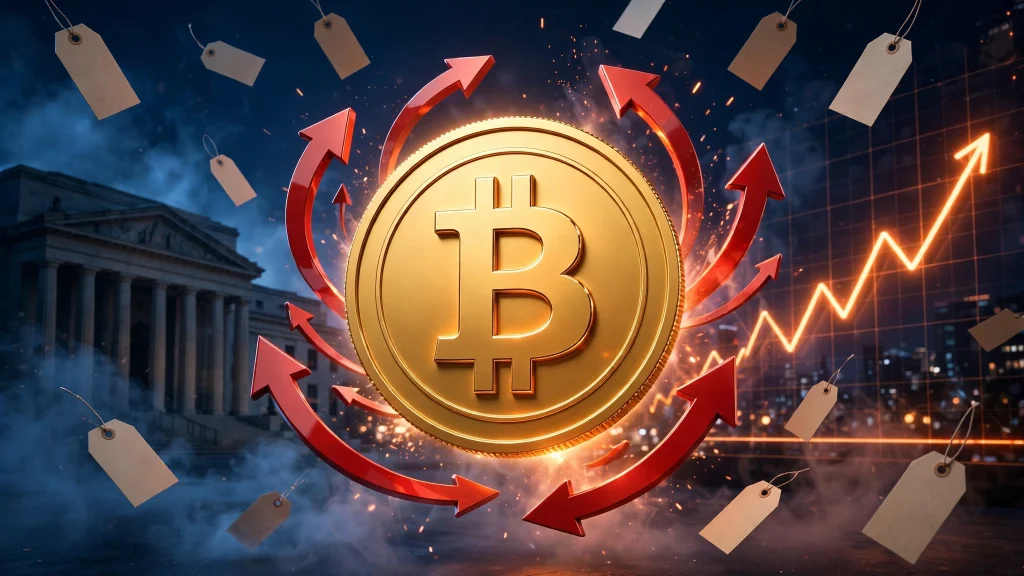
What Is Inflation’s Effect on Crypto? 7 Facts That Explain How CPI Reports and Fed Rate Decisions Move Bitcoin
What Is Inflation’s Effect on Crypto?
The inflation effect on crypto is one of the most talked-about topics in the market — and one of the most misunderstood. Inflation is the steady rise in the price of everyday goods and services, which slowly reduces what your money can buy. When inflation runs hot, central banks raise interest rates to cool it down, and those rate decisions ripple through every market, including Bitcoin and other cryptocurrencies.
So does inflation help or hurt crypto? The honest answer is: it depends on the moment. Inflation can make Bitcoin look attractive as a scarce asset, but the interest-rate hikes used to fight inflation often pull money out of risky assets like crypto. Here are 7 facts that explain how it really works.
1. Inflation Shrinks the Value of Cash — and That Is Why People Look at Bitcoin
When inflation is high, the dollars in your bank account buy less each year. That is why some investors look for assets that cannot be printed in unlimited amounts. Bitcoin has a fixed supply of 21 million coins, and no government or central bank can create more of it.
This scarcity is the heart of the “Bitcoin as digital gold” idea. Supporters argue that, like gold, Bitcoin can protect purchasing power over the long term because its supply is limited while fiat money supply keeps growing. That argument is popular, but it is a theory about the long run — not a guarantee about what happens in any single year.
2. The CPI Report Is the Number the Whole Market Watches
The Consumer Price Index (CPI) is the U.S. government’s main measure of inflation. It tracks the price of a basket of everyday goods and services, from groceries to rent. The CPI report comes out once a month, and crypto traders watch it closely.
Why does one report matter so much? Because a hotter-than-expected CPI reading tells the market that inflation is still a problem, which usually means interest rates will stay high for longer. A cooler reading does the opposite. On CPI mornings, Bitcoin often moves sharply within minutes of the release — up on soft numbers, down on hot ones.
3. The Fed’s Interest Rate Decisions Move Crypto More Than Inflation Itself
Here is the twist most beginners miss: it is not inflation itself that moves crypto prices day to day, but the Federal Reserve’s response to it. When the Fed raises interest rates to fight inflation, borrowing becomes more expensive and safer investments like Treasury bonds pay more.
That pulls money away from riskier assets, including stocks and crypto. When the Fed signals rate cuts instead, money tends to flow back toward risk. In short, high rates are usually a headwind for Bitcoin, and the prospect of lower rates is usually a tailwind — even though neither is a certainty.
4. Bitcoin Has Not Always Behaved Like an Inflation Hedge
If Bitcoin were a simple inflation hedge, it would rise whenever inflation rises. In reality, the record is mixed. During 2021, when U.S. inflation surged to multi-decade highs, Bitcoin did climb to new all-time highs. But in 2022, even as inflation stayed high, Bitcoin fell sharply as the Fed raised rates aggressively.
The lesson is that Bitcoin responds to many forces at once: interest rates, market sentiment, regulation, and big news events. Inflation is one ingredient, not the whole recipe. Anyone who tells you Bitcoin always protects against inflation is oversimplifying.
5. Rate Hikes Hit Crypto Through the Dollar and Through Borrowing Costs
Higher interest rates strengthen the U.S. dollar, and a strong dollar often pressures Bitcoin, which is priced in dollars around the world. At the same time, higher rates make leveraged trading more expensive. Traders who borrow money to buy crypto face bigger costs, so some close their positions — and that selling can push prices down fast.
This is one reason crypto can fall so quickly after a hawkish Fed announcement. To understand how fast those drops can happen, read our guide on what a crypto market crash is and why prices fall so fast.
6. Stablecoins and Everyday Crypto Users Feel Inflation Differently
Not all crypto reacts to inflation the same way. Stablecoins like USDT and USDC are designed to stay at $1, so inflation does not change their price — but it does quietly reduce what that $1 can buy, just like cash. Meanwhile, people in countries with very high inflation sometimes turn to Bitcoin or stablecoins to escape a collapsing local currency.
For a beginner in the USA, though, the practical point is simple: holding crypto does not shield you from rising grocery prices in the short term. Its value can swing far more in a week than inflation moves in a year.
7. What Beginners Should Actually Watch Instead of Guessing
You cannot predict the Fed, and you cannot predict Bitcoin. But you can watch the same signals the market watches, and use them to understand — not to trade on. Here is a simple checklist:
- Watch the monthly CPI release: a hotter reading than expected usually means rates stay higher for longer.
- Listen to Fed statements: words like “higher for longer” or “patient” tell you more than any single data point.
- Check the Fear & Greed Index: rate news often swings market mood quickly — see how to read it in our guide to the Crypto Fear and Greed Index.
- Zoom out: one CPI report is noise; the trend over several months is the signal.
- Never trade on a single headline: CPI-day moves often reverse within hours.
The Bottom Line
Inflation affects crypto mainly through the Federal Reserve’s interest-rate response: high inflation usually means higher rates, and higher rates usually pressure Bitcoin and other cryptocurrencies. Bitcoin’s fixed supply makes it an interesting long-term idea as a store of value, but its short-term price has often moved against inflation when rates were rising. The smartest approach for a beginner is to understand the chain — CPI report, Fed decision, interest rates, market mood — and to keep learning instead of betting on the next headline.
Share this article with a friend who is new to crypto — it could help them understand why a boring inflation report can move Bitcoin before their morning coffee.
Disclaimer: This article is for educational purposes only and is not financial advice. Cryptocurrency prices are volatile. Always do your own research before buying any crypto asset.