What Are Crypto Token Unlocks? 7 Facts Every Beginner Should Know
New crypto projects do not release all of their tokens at once. A large share is usually locked up at launch and released slowly over months or years. When a batch of locked tokens is released, it is called a crypto token unlock. These events matter because they change how many tokens are available to buy and sell, and beginners who hold or follow a coin should understand what is happening. This guide explains crypto token unlocks in plain words and shares seven facts every beginner should know.
1. What Crypto Token Unlocks Actually Are
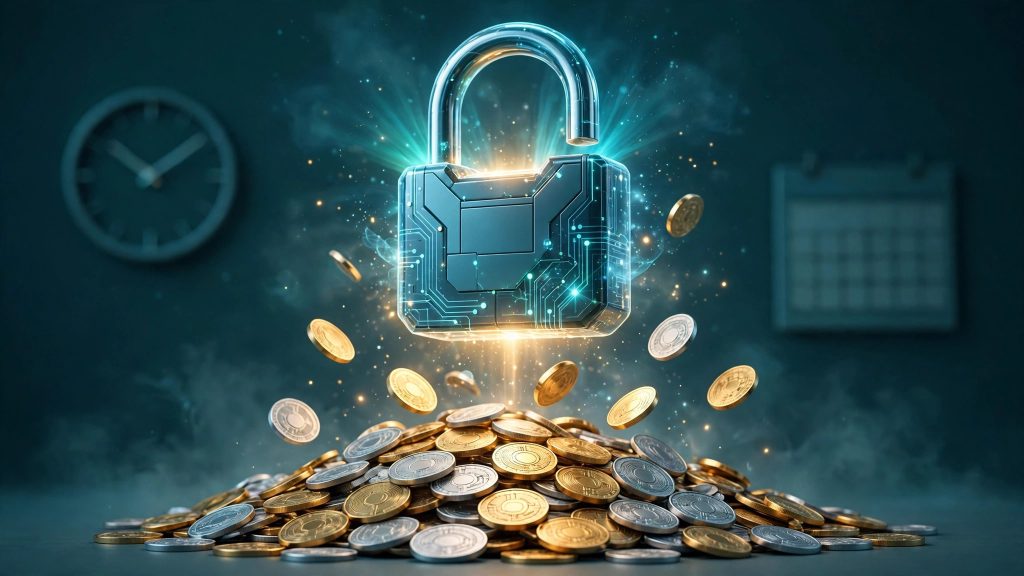
Crypto token unlocks are scheduled releases of tokens that were locked after a project launched. When a team creates a new token, it usually sets aside portions for the team, early investors, the community, and future development. Those portions are locked in a smart contract, which is a program on the blockchain that only releases tokens when a set date or condition arrives. An unlock is simply the moment one of those locked batches becomes available. The tokens do not appear from nowhere. They existed from the start, but nobody could move or sell them until the unlock date.
2. Why Projects Lock Tokens in the First Place
Locking tokens protects a young project from being flooded with supply on day one. If every token were available immediately, early holders could sell everything at once, and the price could collapse before the project even starts. A lockup schedule spreads selling pressure over time and gives the team a reason to keep building, because their own tokens only become valuable if the project is still alive when the unlock arrives. Lockups also signal commitment. When a team agrees to wait years for its own tokens, it is telling the public that it plans to stay. Beginners should still check the details, because a long lockup is a good sign, not a guarantee.
3. The Difference Between Circulating Supply and Total Supply
Every coin has two supply numbers that beginners often mix up. Total supply is all the tokens that will ever exist. Circulating supply is the number of tokens that are currently free to trade. The gap between the two is mostly locked tokens waiting for their unlock dates. When an unlock happens, circulating supply rises, while total supply stays the same. This matters because many websites rank and compare coins by market value, which is price multiplied by circulating supply. After a large unlock, that number can rise even if the price does not move. If you only watch price, you can miss a big change in supply.
4. Who Receives the Unlocked Tokens
Unlocked tokens usually go to one of four groups: the project team, early private investors, advisers, or a community fund. Each group may behave differently. Team members often hold for longer, because selling heavily would damage their own project. Early investors, on the other hand, may have bought at a much lower price than the public, so they have a stronger reason to sell once their tokens unlock. Community funds are often spent slowly on grants and rewards. Before you buy a coin, find its unlock schedule and see who gets the next batch. A large unlock going to early investors deserves more caution than a small unlock going to a community fund.
5. How to Find an Unlock Schedule Before You Buy
You do not need special tools to check unlocks. Most projects publish their token distribution and vesting schedule in their whitepaper or on their official website, and several free tracking websites list upcoming unlocks for hundreds of coins with dates and amounts. When you look at a schedule, note three things: the date of the next unlock, how many tokens will be released, and what share of the circulating supply that represents. A release of one percent of supply is a small event. A release of twenty percent is a large one. This is part of how to research an altcoin properly: supply changes are as important as the idea behind the project.
6. What Usually Happens Around an Unlock
Around an unlock, three things tend to happen. First, trading volume often rises, because more tokens are available to trade. Second, some holders sell some or all of their newly unlocked tokens, which adds selling pressure. Third, the market often reacts before the date itself, because traders know the schedule in advance and may act early. None of this means the price must fall. If demand for the coin is strong, new buyers can absorb the extra supply. But a beginner should never be surprised by an unlock. Mark the dates on a calendar, keep your position size small, and avoid buying a large amount just days before a major unlock without understanding what is coming.
7. How Beginners Should Handle Unlocks in Practice
The practical approach is simple. First, prefer coins whose unlock schedule is public, gradual, and spread over years rather than months. Second, check whether the team and early investors still have most of their tokens locked; a project where insiders are already mostly unlocked deserves extra care. Third, do not make an unlock the only reason to buy or sell. A good project with a large unlock can still be worth holding, and a weak project with no unlocks near is still weak. Finally, remember that stablecoins and large established coins usually have no unlock events at all, which is one reason beginners often start with them while they learn. Unlocks are a normal part of crypto, not a reason to panic, as long as you know they are coming.
Crypto token unlocks are scheduled releases of tokens that were locked at launch. They raise circulating supply, they usually go to the team, early investors, or a community fund, and their dates are public, so there is no reason to be caught off guard. The facts to remember are simple: check the schedule before you buy, note who receives the tokens, and judge the size of the release against the supply already trading. Used that way, unlocks are just one more piece of information that helps you make calmer, better-planned decisions.
If this helped, share it with a friend who follows new coins — it might save them from buying right before a big unlock.
Disclaimer: This article is for educational purposes only and is not financial advice. Cryptocurrency prices are volatile. Always do your own research before buying any crypto asset.